





Short answer: shared hosting is the cheapest way to get a small, low-traffic site online, while cloud hosting costs more but scales with traffic and isolates you from other customers’ problems. For a growing brand, with campaigns that cause traffic spikes, an online store or several sites to run, cloud hosting is usually the better choice. Here is how to decide.
What Is Web Hosting?
Web hosting is a service that stores your website’s files on servers and makes them available online. There are many types. This article compares the two most common starting points: shared hosting and cloud hosting.
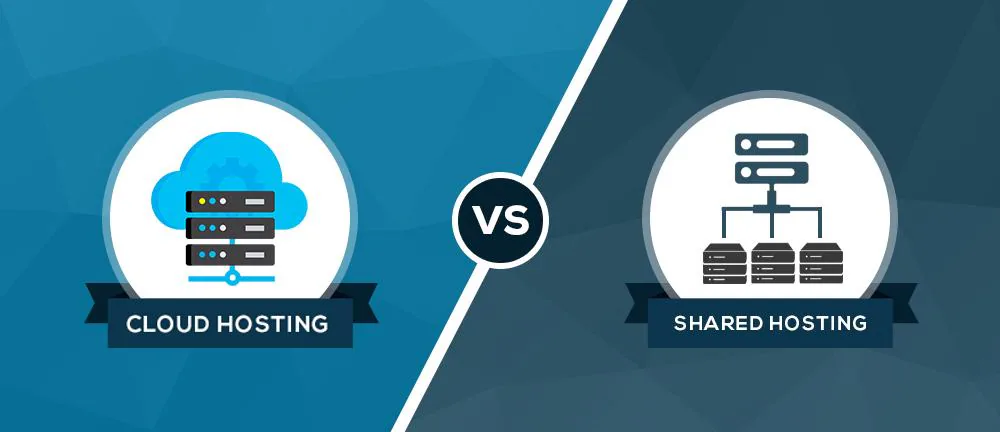
What Is Shared Hosting?
With shared hosting, one server is divided between many customers, and each gets a share of its capacity. It is the most economical option and works well for brochure sites, blogs and early-stage businesses with modest traffic. Most plans include a control panel, email, one-click WordPress installs and a free SSL/TLS certificate.
The drawback is the shared part. Heavy use by other sites on the same server can slow yours down, and your resources are capped, so a sudden spike can take your site offline.
What Is Cloud Hosting?
Cloud hosting runs your website on virtual servers drawn from a large pool of hardware. You get dedicated resources that you can resize as you grow, without owning or managing physical machines. Options range from unmanaged virtual servers, where you handle the software yourself, to managed cloud hosting, where the provider handles setup, security updates and backups.
How Much Does Each Cost?
Prices below are the providers’ published US-dollar prices when we checked in October 2026. Introductory shared hosting prices usually require a multi-year term and rise at renewal, so compare the renewal price, not just the headline.
| Option | Example | Published starting price |
|---|---|---|
| Shared hosting | Hostinger Premium | $2.99/month on a 48-month term, renewing at $10.99/month |
| Shared hosting | Bluehost Starter | $3.99/month on a 36-month term, renewing at $9.99/month |
| Unmanaged cloud server | DigitalOcean Droplets | From $4/month |
| Unmanaged cloud server | AWS Lightsail | From $5/month with a public IPv4 address |
| Managed cloud hosting | Cloudways on DigitalOcean | From $11/month |
The entry prices look similar, but they buy different things. A $4 cloud server comes with no control panel, email or support for your website software. For a business without in-house technical skills, the fair comparison is shared hosting against managed cloud hosting.
Shared vs Cloud Hosting: Key Differences
Scaling and Performance
Cloud hosting handles growth better. You can add memory and processing power as traffic rises, often in minutes, and some setups scale automatically. Shared hosting gives you a fixed slice of one server, so a successful campaign or a sale can overload it just when it matters most.
Uptime
Uptime depends on the provider and the setup more than the label. Read each provider’s service level agreement (SLA). DigitalOcean, for example, commits to 99.99% monthly uptime for each Droplet (DigitalOcean), while AWS Lightsail’s higher commitment applies only when you run across multiple availability zones (Aws). On shared hosting, you also depend on how other customers use the same server.
Speed
Speed affects how long visitors stay and whether they buy. Dedicated cloud resources usually mean faster, more consistent server response times than a busy shared server. Hosting is only part of the picture, though. Images, scripts and caching matter too, as our guide to free tools to test and fix website speed explains.
Security
On a shared server, sites are less isolated, so a compromised neighbor can affect others. Cloud servers isolate your environment and often include firewalls, private networking and snapshot backups. Managed providers add security patching. On either option, you are still responsible for your own software, passwords and plugins. Our website security checklist covers the essentials.
Control and Effort
Shared hosting is the simplest to run. Unmanaged cloud servers give you full control but need someone who can configure and maintain a server. Managed cloud hosting sits in between: more power than shared hosting, without the system administration work.
Which Should a Growing Brand Choose?
- Choose shared hosting for a simple site with steady, modest traffic and a tight budget.
- Choose managed cloud hosting if you run an online store, run paid campaigns that cause traffic spikes, manage several sites, or simply can’t afford slow pages or downtime.
- Choose an unmanaged cloud server only if you have the technical skills, or a developer, to maintain it.
Most growing brands outgrow shared hosting sooner than they expect, so plan the move before a busy season rather than during one. If you would rather not manage hosting at all, Apex®, the AI-native digital experience platform (DXP), runs your site on AWS hosting with caching as part of the platform, and our web development team can handle the migration.