








Design and UX
Sites built on assumptions confuse the people they are for. Read about design thinking, user testing and UX trends that help you design around real users.
- 3
- Articles
- 10
- Categories
- 532,221
- Readers
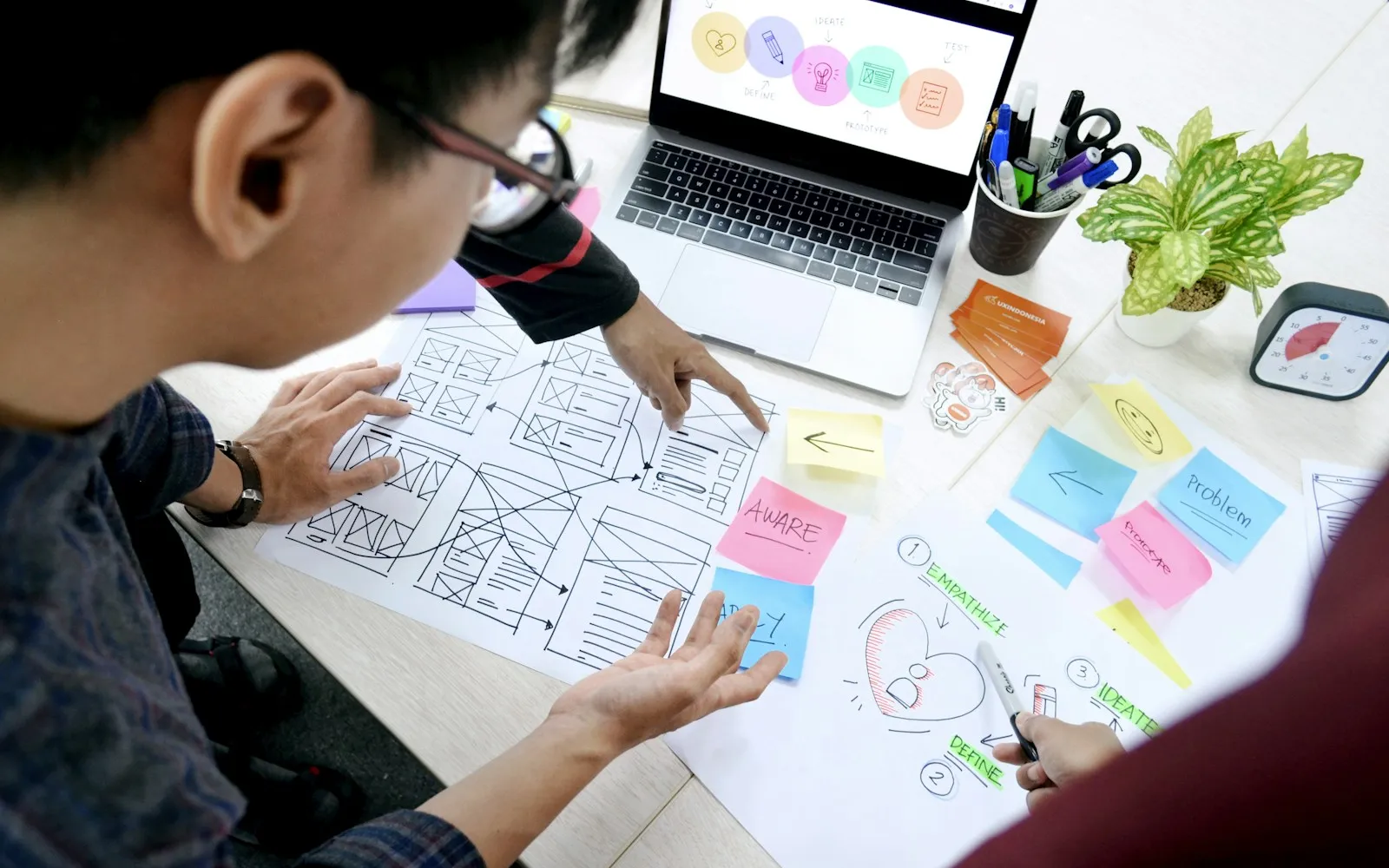
The 5 Stages of the Design Thinking Process
Learn the five stages of the design thinking process: empathize, define, ideate, prototype and test, plus how AI fits in and when your team should use it.Read Article
Drunk User Testing: What It Is and Why It Works
Drunk user testing shows whether your website is clear enough for a distracted visitor. Learn where it came from, what it reveals, its limits and safer options.Read ArticleFAQs
Questions, Answered
Can’t find what you’re looking for? Our team is happy to help.
What do the Cyberdunes design and UX articles cover?
The Cyberdunes design and UX articles cover design thinking, user testing and UX trends for websites and digital products. Each guide focuses on designing around how real users behave rather than internal assumptions, with practical steps teams can apply to their own sites and products.
What is UX design?
UX (user experience) design is the practice of shaping how a person finds, understands and uses a website or product. It covers structure, navigation, content, interaction and visual clarity, with the goal of helping users complete their tasks easily. Good UX design is based on research and testing with real users, not guesses.
What is the difference between UX and UI design?
UX design is about the overall experience: whether users can find what they need and complete their goals. UI (user interface) design is about the visual and interactive layer, such as layout, typography, color, buttons and forms. The two work together, since a beautiful interface still fails if the underlying journey is confusing.
What is design thinking?
Design thinking is a human-centered problem-solving process that starts with understanding users before proposing solutions. It typically moves through stages such as empathizing, defining the problem, generating ideas, prototyping and testing. Teams repeat the cycle, using what they learn from users to refine the solution.
Why does designing around real users matter?
Designing around real users matters because sites built on internal assumptions often confuse the people they are meant for. Visitors who cannot quickly understand an offer or find the next step tend to leave. Research and testing reveal where users struggle, so changes are based on evidence instead of opinion.
What is usability testing?
Usability testing is a research method where people try to complete real tasks on a website or product while the team observes. It shows where users hesitate, get lost or misunderstand content. Even a small number of sessions can surface obvious problems that the team, being too familiar with the product, has stopped noticing.
How can a small team get started with user testing?
A small team can start by asking a few real customers to complete common tasks, such as finding a product or booking a service, on their own phones. Watch and note where they struggle without helping them. Quick methods like five-second tests and short moderated sessions give useful insight without a large research budget.
What are common UX mistakes on websites?
Common UX mistakes include unclear homepages that do not say what is offered, hidden or small calls to action, long forms, intrusive pop-ups and navigation organized around internal teams instead of user needs. Ignoring mobile visitors is another frequent problem. Testing with real users is the fastest way to find which of these apply to a specific site.
How often should a website's UX be reviewed?
A website's UX should be reviewed whenever analytics show friction, such as high exit rates on key pages, and after major changes to content, products or audiences. Many teams also run lighter checks regularly as part of ongoing improvement. Combining analytics with user research shows both where problems occur and why.
How does UX affect conversions and SEO?
UX affects conversions because visitors who can quickly understand an offer and find the next step are more likely to act. It also supports search performance, since clear structure, fast pages and mobile-friendly layouts help both people and search engines understand content. Poor UX tends to raise bounce and exit rates on important pages.
Can Cyberdunes help with UX and UI design?
Yes, Cyberdunes offers UX and UI design services for websites and digital products, including structured usability reviews. Teams who want to build these skills in-house can also explore the Cyberdunes Masterclass training in design thinking and UX and UI, certified with Ritors Product Nexus.
Ideas Into Action