Skip to content

Digital Experience

What Is a DXP? Features, Benefits and When You Need One

Running your website, content and customer data in separate tools slows your team down. Learn what a DXP is, the features that matter and when you actually need one.

Abstract 3D wave of glowing square pixels in blue, pink and redWhat Is a DXP? Features, Benefits and When You Need One

A digital experience platform (DXP) is software that lets you create, manage, personalize and measure digital experiences across your website, apps and other channels from one place. When your site, content and customer data live in separate tools, every campaign takes longer and customers get an inconsistent experience. A DXP brings those pieces together. This guide explains what a DXP is, the features that matter, the benefits and how to tell whether you need one.

What Is a DXP?

A DXP combines content management, customer data, personalization and analytics in one platform. Where a traditional CMS (content management system) focuses on publishing web pages, a DXP is built to manage the whole customer experience: who sees what, on which channel, and what happens next.
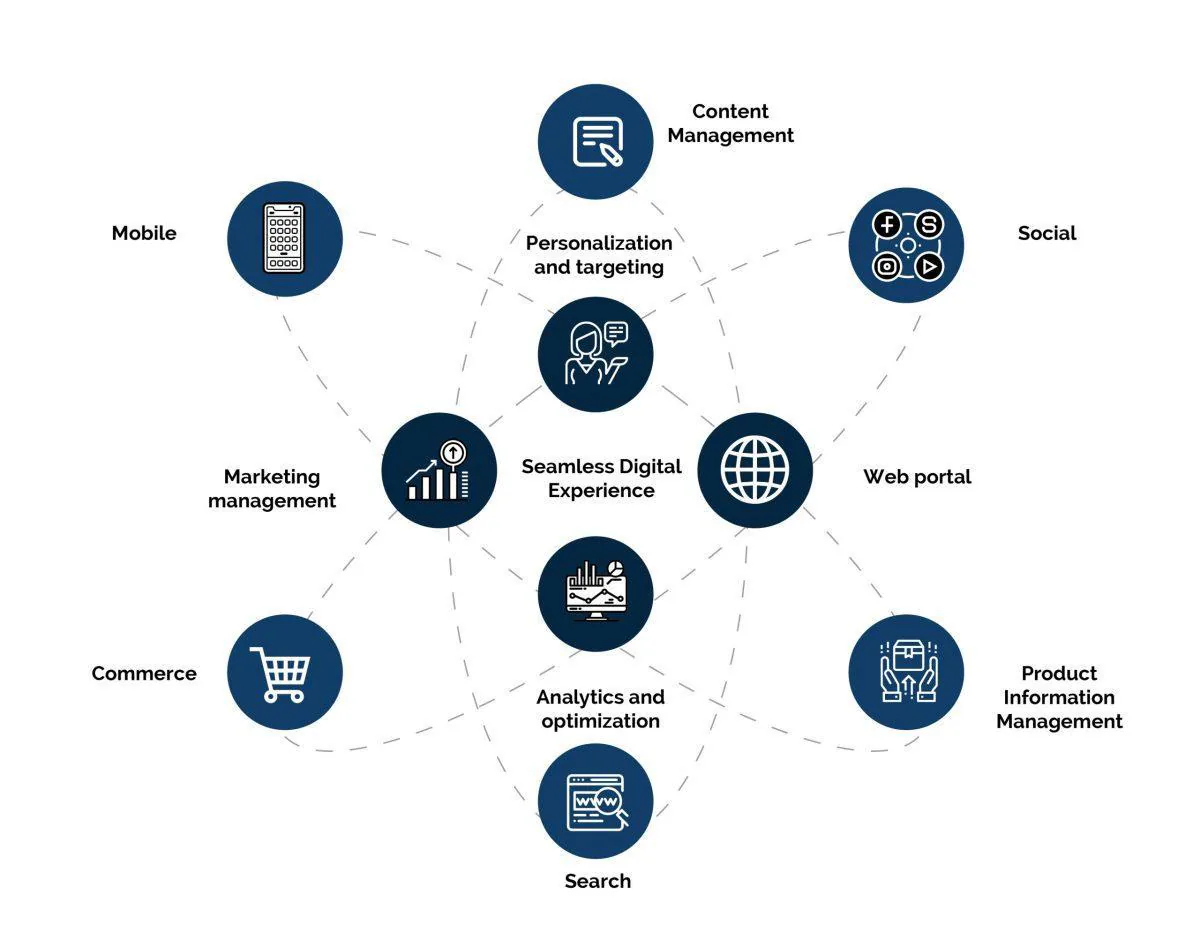
DXP diagram linking content, personalization, analytics, search, commerce, marketing, mobile, social, web portal and PIM

Core Features of a DXP

  • Content management: create and publish content once, then deliver it to websites, apps, email and other channels.
  • Personalization: show different content or offers to different audiences based on behavior, location or customer data.
  • Customer data and integrations: connect to CRM, ecommerce, marketing automation and analytics tools so data isn't stuck in silos.
  • Analytics and testing: measure what works and run experiments such as A/B tests to improve conversion.
  • Search and AI visibility: technical SEO, structured data and, on newer platforms, tools that show how AI engines such as ChatGPT, Gemini, Claude, Perplexity and Google AI Overviews describe your brand.

Benefits of a DXP

More Relevant Experiences

Personalization is now an expectation. In McKinsey's research on the value of getting personalization right, 71% of consumers said they expect personalized interactions and 76% said they get frustrated when they don't get them. A DXP makes personalization practical because content, data and delivery sit in one system.

Faster, More Consistent Publishing

Teams work from shared content, templates and brand rules, so launches take less time and messaging stays consistent across channels.

Better Decisions

Analytics in the same place you publish shows which pages and journeys convert, so you can improve them instead of guessing.

Visibility in AI Search

Buyers increasingly get answers from AI engines before they visit a website. Those engines favor sources with clear entities, structured data and consistent facts. A DXP that manages schema and tracks AI answers helps your brand show up in them.

When Do You Need a DXP?

A DXP is worth considering when several of these are true:

  • You run more than one site, brand, language or channel, and keeping them consistent is hard.
  • Your team relies on developers for routine content changes.
  • You use separate tools for the CMS, SEO, analytics, forms and personalization, and data doesn't flow between them.
  • You want to know how AI engines describe your brand, and fix it when they get it wrong.
  • Conversion matters more to you than simply having a website.

If you run a five-page brochure site that rarely changes, a DXP is probably more than you need.

Enterprise or Small Business?

DXPs range from enterprise suites with long implementations to tiered platforms sized for smaller teams. If you are evaluating platforms for a large organization, read Enterprise DXP: What It Does and How to Choose One. If you are a smaller team watching budget, our guide to DXP costs for small businesses explains what drives price and what to ask vendors.

See a DXP in Practice

Apex®, the AI-native digital experience platform (DXP) from Cyberdunes, combines a GEO-first CMS (GEO stands for generative engine optimization) with schema management, llms.txt and tracking of how AI engines describe your brand, so you can publish, measure and fix in one place. Book a demo to see it with your own content.


FAQs

Questions, Answered

Can’t find what you’re looking for? Our team is happy to help.

What is a DXP?

A DXP, or digital experience platform, is software that lets you create, manage, personalize and measure digital experiences across your website, apps and other channels from one place. It combines content management, customer data, personalization and analytics so teams stop juggling separate tools and customers get a consistent experience.

What is the difference between a DXP and a CMS?

A traditional CMS, or content management system, focuses on publishing web pages. A DXP is built to manage the whole customer experience: who sees what, on which channel, and what happens next. It adds personalization, customer data, integrations and analytics on top of content management.

What are the core features of a DXP?

The core features of a DXP are content management that publishes once to many channels, personalization based on behavior, location or customer data, integrations with CRM, ecommerce and marketing tools, analytics and testing such as A/B tests, and search and AI visibility tools like technical SEO and structured data.

Why does personalization matter when choosing a DXP?

Personalization is now an expectation. In McKinsey research, 71% of consumers said they expect personalized interactions and 76% said they get frustrated when they do not get them. A DXP makes personalization practical because content, customer data and delivery sit in one system.

How does a DXP help with visibility in AI search?

A DXP helps with AI search visibility by managing clear entities, structured data and consistent facts, which AI engines tend to favor when choosing sources. Newer platforms also track how ChatGPT, Gemini, Claude, Perplexity and Google AI Overviews describe your brand, so you can correct inaccurate answers.

How do I know if my business needs a DXP?

A DXP is worth considering when you run more than one site, brand, language or channel, rely on developers for routine content changes, use disconnected tools for CMS, SEO, analytics and forms, want to know how AI engines describe your brand, or care more about conversion than simply having a website.

When is a DXP more than a business needs?

A DXP is probably more than you need if you run a small brochure site, such as five pages that rarely change, with no need for personalization, multiple channels or connected customer data. In that case a simple website or CMS will usually be enough until your needs grow.

Are DXPs only for large enterprises?

No. DXPs range from enterprise suites with long implementations to tiered platforms sized for smaller teams. Large organizations should weigh integration depth and governance, while smaller teams on a budget should look at what drives price and ask vendors clear questions about plans and implementation effort.

How does a DXP speed up publishing?

A DXP speeds up publishing because teams work from shared content, templates and brand rules in one system. Launches take less time, routine changes need less developer help, and messaging stays consistent across websites, apps and email, instead of being rebuilt separately in each tool.

What is Apex® and how does it relate to DXPs?

Apex® is the AI-native digital experience platform (DXP) from Cyberdunes. It combines a GEO-first CMS, where GEO stands for generative engine optimization, with schema management, llms.txt and tracking of how AI engines describe your brand, so teams can publish, measure and fix content in one place.

Put It Into Practice

Want Help Putting These Ideas to Work in Your Business?