








Design and User Testing
Good design starts with understanding users. Learn the five stages of the design thinking process and how user testing exposes where your site confuses people.
- 2
- Articles
- 10
- Categories
- 532,221
- Readers

FAQs
Questions, Answered
Can’t find what you’re looking for? Our team is happy to help.
What is design thinking?
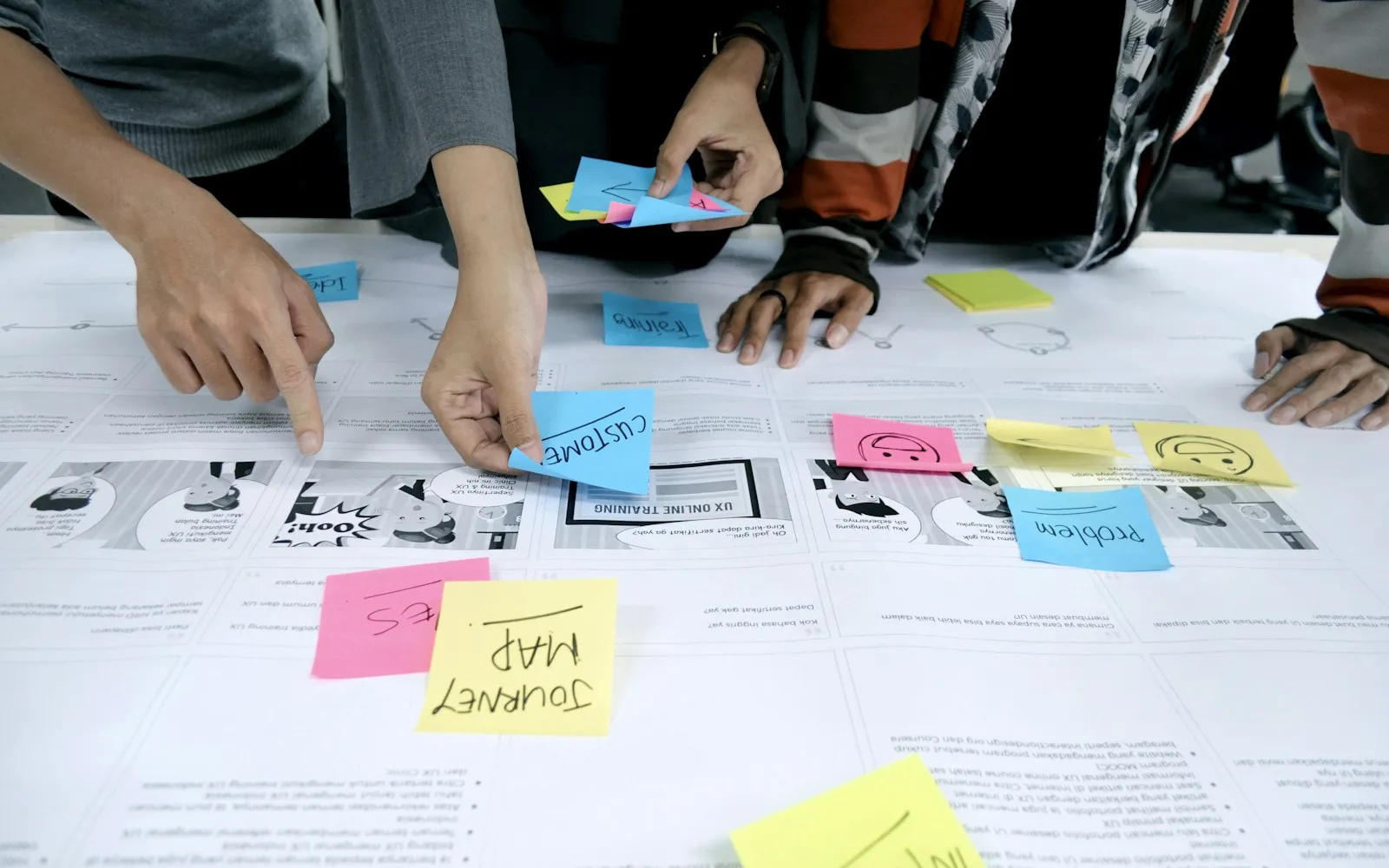
Design thinking is a problem-solving approach that starts with understanding the people you are designing for. Teams use it to explore a problem from the user's point of view, generate ideas, build quick prototypes and test them, rather than jumping straight to a solution.
What are the five stages of the design thinking process?
The five stages of the design thinking process are empathize, define, ideate, prototype and test. Teams learn about users, frame the real problem, generate a range of ideas, build simple versions of the best ones and test them with users, often looping back as they learn.
Is design thinking a linear process?
Design thinking is not strictly linear. The five stages give structure, but teams often return to earlier stages when testing reveals something new, such as redefining the problem after watching users struggle with a prototype. That iteration is a normal and useful part of the process.
When should a team use design thinking?
Design thinking works best when a problem is unclear or user needs are not well understood, such as a new product, a confusing customer journey or a feature that is not being adopted. For well-defined problems with known solutions, a lighter process may be enough.
What is user testing?
User testing is the practice of watching real people try to complete tasks on a website, app or prototype. It shows where users hesitate, get confused or give up, giving teams evidence about what to fix that analytics alone cannot provide.
Why does user testing matter for website design?
User testing matters because designers and stakeholders know their site too well to see it as a newcomer does. Watching real visitors reveals unclear labels, hidden actions and confusing steps, so the team can fix the problems that cost sign-ups, bookings or sales.
What is drunk user testing?
Drunk user testing is an unconventional method where a mildly intoxicated participant tries to use a website. The idea is that if a distracted visitor can complete a task, the design is clear. It has obvious limits and safety concerns, so many teams prefer safer methods that simulate distraction.
How many users do I need for a usability test?
A small round of usability testing can be very useful: watching around five people use a key journey often surfaces the biggest problems. Fix what you find, then test again, rather than running one large study and waiting for perfect data.
How does AI fit into design thinking?
AI can support design thinking by summarizing research, clustering feedback, generating ideas and producing quick prototypes. It does not replace talking to users or judging whether a solution truly works, so teams should still keep empathy and testing grounded in real people.
What will I find in the Cyberdunes design articles?
The Cyberdunes design articles explain the five stages of the design thinking process and how user testing, including the unusual practice of drunk user testing, shows where a website confuses people. They are aimed at product, design and marketing teams improving real customer journeys.
Ideas Into Action