
Many people ask me how to write SEO meta descriptions, yet some are not sure what metadata is. So let’s start with the basics, including how Google actually uses the tag today. If you are new to SEO, read our guide to the 5 SEO basics that still matter in AI search first.
What Is a Meta Description?
A meta description is an HTML tag that summarizes a web page in a sentence or two. Search engines sometimes show it under your page title in the results, so its job is to tell searchers what the page offers and persuade them to click.
A meta description tag looks like this:
<head>
<meta name="description" content="Here is the description of the web page.">
</head>
How Google Uses Meta Descriptions Today
Google’s documentation is clear that it builds snippets “primarily” from the page content itself. It “sometimes uses the meta description” when that gives users a more accurate description than text from the page (Google Search Central). In practice, Google often rewrites the snippet to match the specific search, so the same page can show different text for different queries.
Three more points from Google’s guidance are worth knowing:
- There is no length limit. Google truncates snippets to fit the screen, so the visible length varies by device. Keeping the core message within about 150 to 160 characters is a practical way to avoid it being cut off.
- Meta descriptions are not a ranking factor. They matter because a clear, relevant description can win more clicks when Google does show it.
- Unique beats generic. Google recommends a distinct description for each page rather than the same text everywhere.
AI answers have also changed how people click. In a Pew Research Center study, users who saw a Google AI summary clicked a traditional result in 8% of visits, against 15% when no summary appeared (Pew Research Center, July 2025). With fewer clicks to go around, a snippet that clearly matches the searcher’s need matters more, not less.
Why SEO Metadata Is Important
A good meta description can increase clicks and visits from organic search. The clearer and more relevant it is, the more likely people are to choose your link over a competitor’s. Social platforms and messaging apps may also show it in link previews when a page has no dedicated Open Graph description. It is your small space to explain what the page offers.
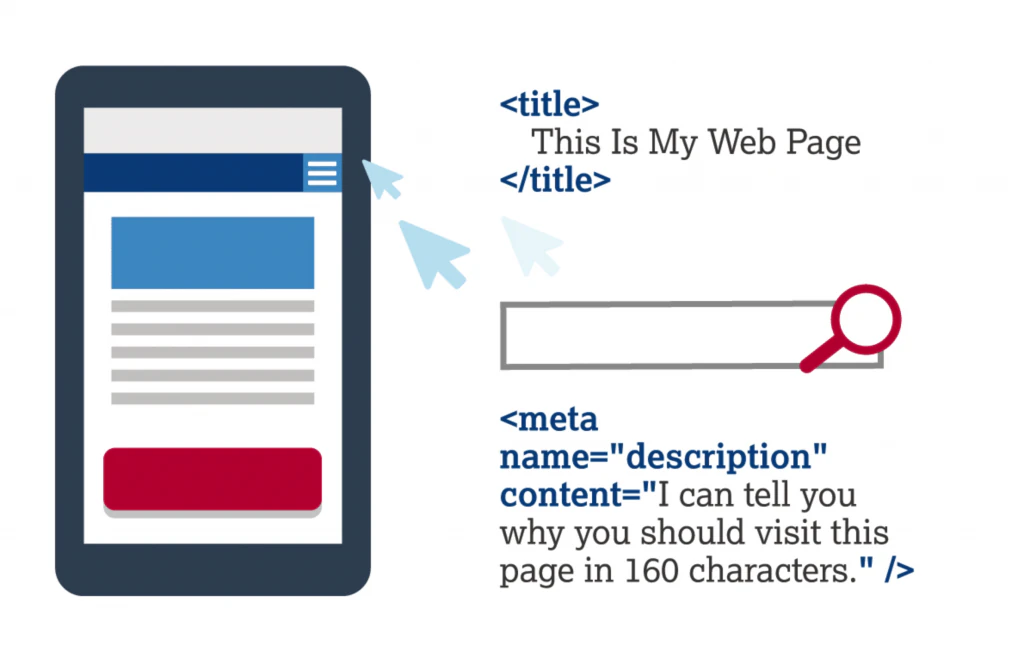
When you understand what searchers want and tell them clearly that your page has it, you earn clicks without paying for ads.
How to Write Meta Descriptions for SEO
Follow these nine steps to write meta descriptions that earn clicks.
- Include your main keyword
Use the page’s main keyword or question naturally. Search engines often bold words that match the searcher’s query, which makes your result stand out.
- Avoid keyword stuffing
Write a readable sentence for people. Too many keywords make the description hard to read, and Google is more likely to replace it.
- Match the page content
Describe what the page actually contains. If the description promises something the page does not deliver, visitors leave and Google is more likely to ignore your text.
- Put the important words first
Lead with the value of the page so the key message survives if the snippet is cut off. About 150 to 160 characters is a sensible target.
- Write a unique description for every page
Write a unique description for each page, just as you write a unique title. Google does not penalize duplicates, but repeated descriptions waste the snippet and make Google more likely to replace them with its own text.
- Keep it conversational
Write for searchers, not for algorithms. Natural language communicates better.
- Relate to the user
Think of the description as your page’s unique selling point (USP). Speak to what the searcher needs. For product pages, details such as price, availability or key features can help.
- Use active voice
Write in active voice, address the searcher directly and give them a reason to click. The searcher should know exactly what they will get.
- Use special characters sparingly
Search engines can read symbols such as ampersands (&) and plus signs (+), but too many make a snippet look cluttered. Avoid unescaped double quotation marks, because they can break the tag in your HTML.
Make Meta Descriptions Part of Publishing
Meta descriptions are a small but useful part of search engine optimization. Many businesses skip them and miss an easy chance to improve their click-through rate (CTR). Check which descriptions Google actually shows by searching for your key pages, and rewrite the ones it keeps replacing.
If you manage a large site, build descriptions into your publishing routine. In Apex®, the AI-native digital experience platform (DXP), every page has its own metadata fields, so writing a unique description becomes part of publishing.